
Why Multi-Device Compatibility Is Still a Real Headache in 2026
blog.tableOfContents
blog.inBrief
Multipoint and recent Bluetooth standards have made it much easier to use the same pair of earbuds across several devices. Yet in 2026, juggling multiple ecosystems still isn't as seamless as the marketing suggests. Here's what actually limits multi-…
Multipoint and recent Bluetooth standards have made it much easier to use the same pair of earbuds across several devices. Yet in 2026, juggling multiple ecosystems still isn't as seamless as the marketing suggests. Here's what actually limits multi-device use today, and what you can do about it.
A Quick Refresher: What "Multipoint" Actually Does
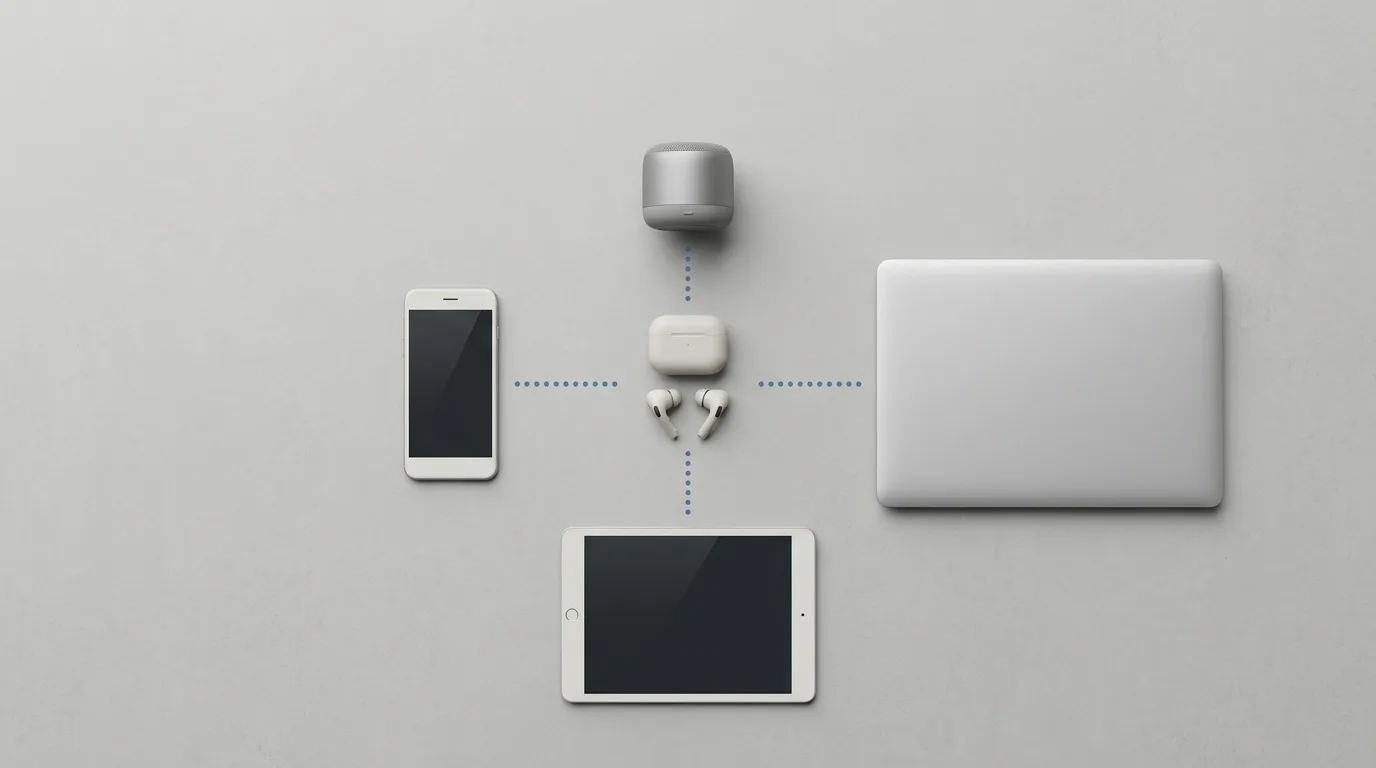
Multipoint lets a single pair of earbuds stay connected to two devices at the same time — say, your phone and your laptop — and switch audio between them automatically or with minimal input, instead of requiring a manual re-pair every time you change device. It's the feature that made "one pair of earbuds for everything" feel realistic in the first place. The limits below explain why that promise still falls short in daily use.
Multipoint Only Covers Two Devices at a Time
Most multipoint implementations remain capped at two simultaneous connections, while real-world use often involves more than two: a personal phone, a work laptop, a tablet.
Switching to a third device generally requires manually disconnecting one of the two already connected — which recreates the very friction multipoint was supposed to eliminate, the moment a third device enters the picture.
In practice: someone connected to both their personal phone and laptop at once will need to disconnect one of the two to use their earbuds with a tablet, even if all three devices are part of the same daily routine.
Advanced Features Stay Siloed by Ecosystem
The smoothest experience is usually reserved for devices from the same manufacturer. Automatic device switching — where audio jumps to whichever device you're actively using, without you touching a menu — generally works better within a single brand's ecosystem than across brands, even when basic multipoint is technically supported everywhere.
In practice: seamless automatic switching between a laptop and a phone from the same brand can turn into a slower, manual switch as soon as one of the two devices comes from a different manufacturer. Two devices can both "support multipoint" on paper and still behave very differently together.
LE Audio and Auracast: Still Mid-Transition
Bluetooth LE Audio is the newer standard meant to eventually improve multi-device and multi-listener management. Auracast, one of its headline features, allows a single audio source to broadcast to multiple compatible earbuds or hearing aids at once — useful for sharing audio with someone nearby, or for public broadcast use in places like gyms or airports.
The catch is hardware support: LE Audio requires compatible chips on both the earbuds and the source device, and that support is still unevenly spread across the devices people actually own in 2026. A recent pair of LE Audio-compatible earbuds only delivers on these improvements when paired with a source device that's also compatible — which, for most people's everyday device mix (an older phone, a work laptop, a tablet), is far from guaranteed.
What to Check Before Buying, If Multi-Device Use Matters to You
- Multipoint device limit — confirm it's actually two devices, and check whether the manufacturer plans (or has already shipped) support for more.
- Cross-brand switching behavior — if your devices span multiple ecosystems, look for reviews that specifically test cross-brand automatic switching, not just same-brand pairing.
- LE Audio / Auracast support — check whether both your earbuds and your primary devices (phone, laptop) support LE Audio; one-sided support won't get you the benefit.
- Manual switching speed — since you'll likely need it occasionally, check how fast and how intuitive manual reconnection is on the model you're considering.
- Firmware update history — brands that actively patch multipoint and switching behavior tend to improve compatibility over time; check the model's update track record.
What This Means Day to Day
For a genuinely seamless experience across many different devices, some people still prefer using several dedicated pairs of earbuds rather than one universal pair — a pragmatic workaround while waiting for more consistent compatibility across ecosystems.
A few adjustments help reduce friction in the meantime:
- Disconnect your least-used device proactively rather than waiting for a connection conflict to force the issue.
- Check LE Audio compatibility across your whole device set before buying, not just the earbuds' spec sheet.
- Accept a more hands-on approach to managing connections when more than two devices are genuinely part of your routine.
FAQ
Will multipoint evolve to support more than two devices? That's a plausible direction as Bluetooth LE Audio becomes more widespread, though there's no guaranteed timeline for broad adoption across brands.
Are there workarounds for the two-device limit today? Some people use external Bluetooth transmitters/adapters, or simply take a more hands-on approach to managing connections based on which device they need at the moment.
Does this limitation affect all manufacturers the same way? No — multipoint implementation, and how smoothly switching works, varies noticeably from one manufacturer to another. Some brands handle handoff and reconnection far more gracefully than others.
Should you avoid multipoint if you use more than two devices daily? Not necessarily. Multipoint still helps with the two devices you use most, even if it means accepting an occasional manual switch for a less frequently used third device.
Will LE Audio make multipoint obsolete? Not in the short term. LE Audio should gradually improve multi-device management as hardware support becomes more widespread, but it works alongside multipoint rather than replacing it outright.
What's the practical difference between multipoint and Auracast? Multipoint keeps one pair of earbuds connected to two of your devices at once. Auracast is about one audio source broadcasting to multiple listeners' earbuds — a different use case, aimed at sharing or public broadcast rather than personal device switching.
Conclusion
Multi-device compatibility has improved noticeably in recent years, but it remains imperfect in 2026: multipoint is generally capped at two devices, advanced features stay siloed by ecosystem, and LE Audio's rollout is still gradual. Knowing these concrete limits helps set realistic expectations — and, where it matters, to check multipoint limits, cross-brand switching, and LE Audio support across your whole device set before buying, rather than counting on total seamlessness by default.
EarbudsTimeline is an independent project. If this article helped you, a free-amount donation always makes my day.
Stay in the loop
New articles and database updates, no spam.