
IPX/IP Water Resistance: What the Rating Actually Covers (and What It Doesn't)
blog.inBrief
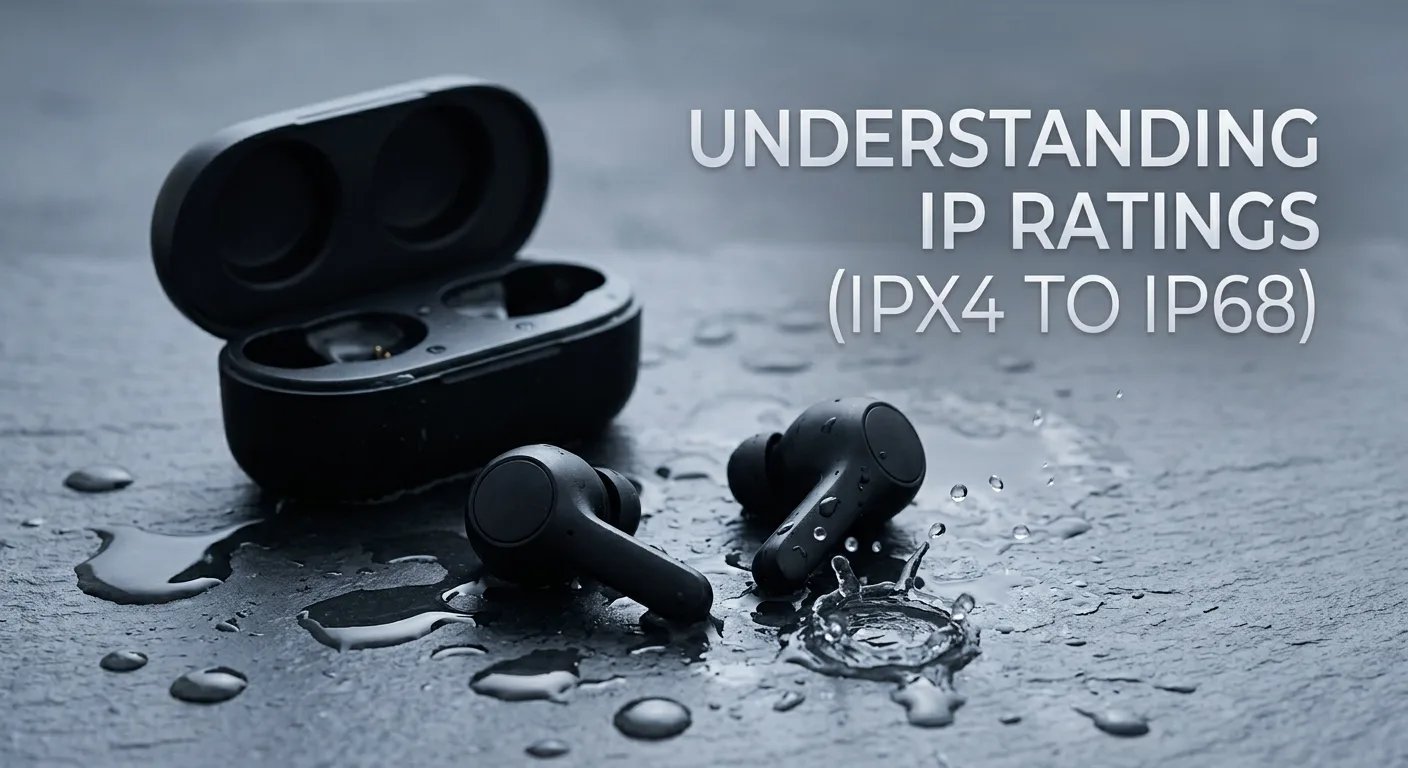
IPX4, IPX7, IP68... the number on the spec sheet isn't a simple scale from weak to bulletproof. Here's how to read it correctly.
The IP rating shows up on almost every recent pair of earbuds, and most buyers read it the same way: higher number, better protection. That shortcut isn't wrong, exactly — but it hides how narrow and specific each test actually is, and where the protection quietly stops.
How the code is built
A full IP rating has two digits after the letters "IP." The first covers protection against solids — dust, particles, even fingers getting where they shouldn't. The second covers water. For earbuds, manufacturers almost never disclose the solids digit, which is why you see "IPX" followed by a single number: the X isn't a grade, it just means that test wasn't run. It doesn't mean the product failed it or has no protection there — there's simply no official score to report.
The tiers, one by one
- IPX3: resistant to water sprayed at an angle, up to 60° from vertical — light rain hitting at an angle.
- IPX4: resistant to splashing from any direction — the baseline for everyday sweat and light rain.
- IPX5: resistant to low-pressure water jets, roughly what a garden hose would produce.
- IPX6: resistant to stronger, higher-volume jets — a meaningful step up from IPX5, closer to heavy washdown conditions.
- IPX7: resistant to temporary immersion up to about one meter, typically for up to 30 minutes under standard test conditions.
- IP68: the highest tier commonly advertised — full dust-tightness combined with immersion resistance beyond what IPX7 covers.
Matching the rating to actual use
For daily wear with occasional sweat, IPX4 is enough. For running in the rain or intense workouts, aim for IPX5 or above. IPX7 and IP68 matter most as insurance against an accidental drop in water — a sink, a puddle, a toilet — rather than as a green light for deliberate water activities.
What the rating almost never covers
IP testing happens in fresh water, under controlled lab conditions, with a specific nozzle, pressure, and duration. Salt water, chlorine, and the sustained pressure of active swimming aren't part of that test, even at the highest ratings — which is exactly why most manufacturers explicitly advise against swimming, IP68 or not. A model that survived an accidental drop in a pool isn't the same thing as a model designed for repeated laps: the lab test and real swimming put very different stress on the seals.
"Waterproof" and "water-resistant" aren't the same claim
Marketing language often blurs this line, but the rating itself doesn't promise permanent, universal protection — it certifies a specific, repeatable test performed once, on a new unit. "Water-resistant" is the more accurate description for what an IP number actually guarantees; "waterproof" tends to overstate it.
Why resistance fades with time
The seals responsible for that protection can wear down — from repeated use, small impacts, or material aging. So the protection you get years into ownership isn't necessarily what the box promised on day one. Avoiding repeated impacts, keeping the mesh and openings clean, and skipping hot showers or saunas with your earbuds in all help slow that decline.
The charging case is a separate story
The IP rating on the box almost always applies to the earbuds, not automatically to the case. Plenty of cases carry no certification at all, or a lower one — check the spec sheet specifically for a case rating; if it isn't mentioned, assume it wasn't tested.
FAQ
Is IPX7 always better than IPX5? On immersion specifically, yes — but they cover different situations. IPX5 is already plenty for standard sports use without deliberate submersion.
Does the charging case share the earbuds' rating? Rarely. Check the spec sheet separately; many cases have lower protection or none.
Can you swim with IP68 earbuds? Generally advised against by manufacturers themselves, since real swimming in salt or chlorinated water doesn't match the lab test conditions.
Does a high rating guarantee lifelong water resistance? No — it reflects a test performed on a brand-new unit. Seal wear over time can reduce actual protection well below the original number.
Conclusion
A high IP rating isn't a blanket guarantee against water — it certifies a specific test that doesn't cover salt water, chlorine, or the pressure of active swimming, and that protection can fade as the product ages. Read correctly, though, it's still one of the most reliable specs for matching earbuds to how you'll actually use them. Compare models directly by their water-resistance rating in our dedicated guide.
EarbudsTimeline is an independent project. If this article helped you, a free-amount donation always makes my day.
Stay in the loop
New articles and database updates, no spam.