
Air Conduction Headphones: How They Differ From Bone Conduction
blog.inBrief
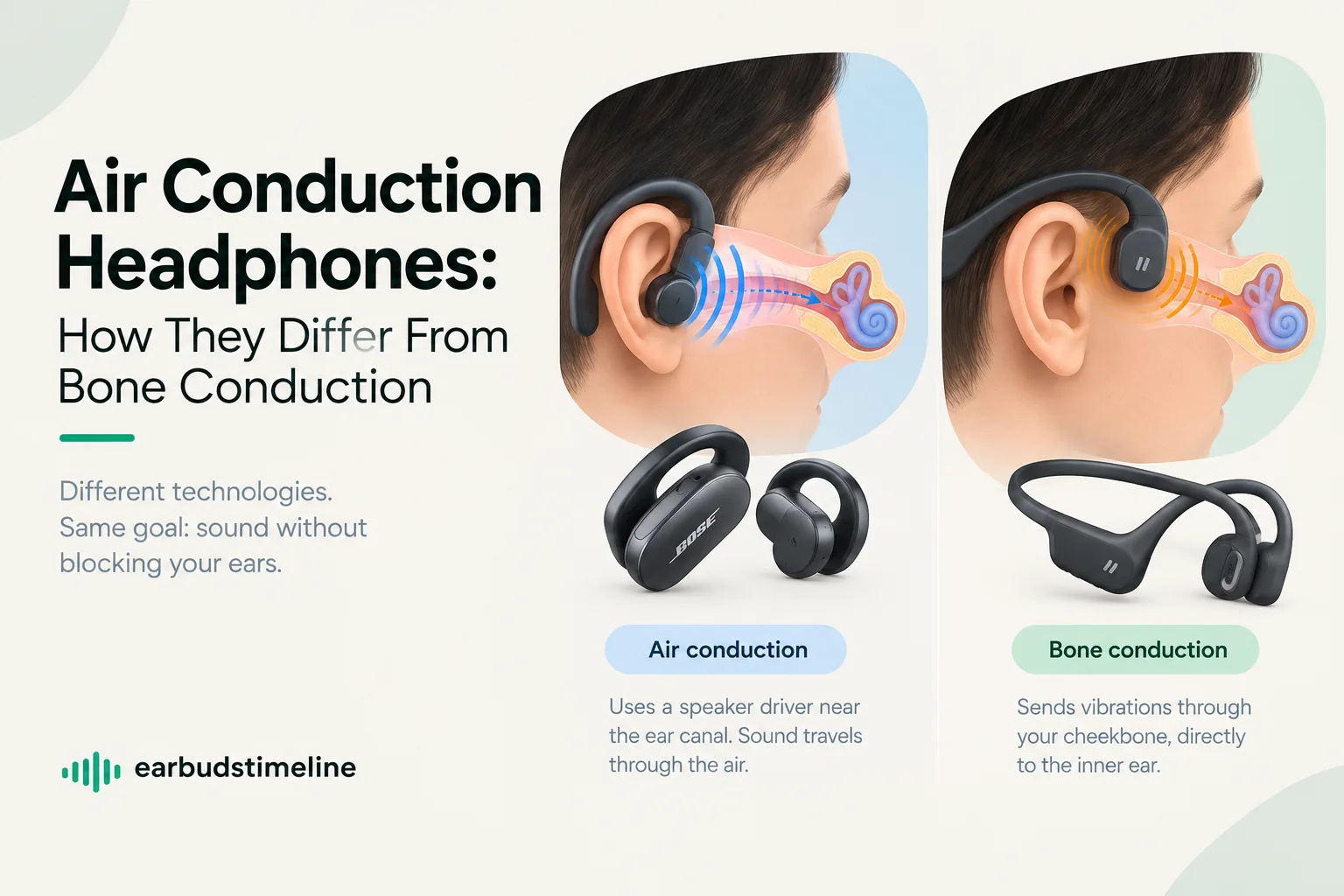
Air conduction open-ear headphones and bone conduction headphones both leave your ear canal open, but they work through completely different physical mechanisms.
Air Conduction Headphones: How They Differ From Bone Conduction
Air conduction and bone conduction headphones are often lumped together simply because neither one blocks your ear canal — but they deliver sound to your ears through genuinely different physical mechanisms.
How air conduction actually works
Air conduction headphones use a conventional speaker driver, just like sealed in-ear or over-ear headphones, but position it near the opening of your ear canal instead of inside it. Sound travels through the air (the normal way your ears hear anything) into your ear canal, rather than being sealed against it. The key design challenge is directing that sound precisely enough that it reaches your ear clearly without leaking loudly to people standing nearby.
How that differs from bone conduction
Bone conduction headphones skip the ear canal and air pathway entirely — a transducer sits against your cheekbone, just in front of your ear, and sends vibrations directly through bone to your inner ear. Your ear canal isn't involved in the sound path at all, which is why bone conduction headphones can be worn with the ear canal completely uncovered and unobstructed, even more so than air conduction designs.
Practical differences that actually matter
Sound quality and bass: Air conduction generally delivers fuller, more natural-sounding bass than bone conduction, since it's using a standard speaker driver rather than transmitting through bone.
Fit style: Air conduction open-ear designs often use a clip or hook around the outer ear; bone conduction designs typically use a full behind-the-head band with two transducer pads.
Sound leakage: Both designs leak some sound to people nearby at higher volumes, but the amount and character of that leakage differs based on the specific driver and acoustic design.
Comfort for glasses or earring wearers: Bone conduction's behind-the-head band can compete for space with glasses arms; air conduction's ear-hook or clip designs sometimes fit more naturally alongside glasses, though this varies by specific product.
A real example: Bose's open-ear earbuds
Bose's Ultra Open Earbuds use air conduction — the company markets this as "OpenAudio" technology, using a small transducer and acoustic port positioned at the ear opening rather than a bone-conduction band. This is a useful concrete example of the difference: it looks similar to a bone-conduction design at a glance (open ear canal, no sealed tip) but works on a completely different acoustic principle.
🤔 Which one should you actually choose?
Prioritize bass and overall sound quality, still want ear-canal awareness: air conduction is generally the stronger pick.
Prioritize maximum situational awareness and don't mind a full behind-the-head band: bone conduction, especially for activities like open-road cycling where awareness matters most.
Wear glasses or sunglasses regularly during use: try both in person if possible, since comfort with either design varies a lot based on your specific glasses frame and ear shape.
Neither air conduction nor bone conduction seals the ear canal, so both trade some passive noise isolation and bass response for situational awareness — the choice between them comes down to fit preference and sound quality priorities rather than one being objectively better than the other.
EarbudsTimeline is an independent project. If this article helped you, a free-amount donation always makes my day.
Stay in the loop
New articles and database updates, no spam.